Next to The Florida Mall in Orlando
407-747-3124
Acrylic vs Gel vs Dip Nails Explained
TL;DR: Acrylics, gel, and dip powder each build a nail enhancement differently, and each has a sweet spot for different clients and lifestyles. All three fall under Florida's Nail Specialist license. Knowing how they behave and why is what separates a tech who gets referrals from one who just fills appointments.
Clients book enhancements for a reason: they want nails that look good and hold up. What they don't always realize is that "nails" is not one thing. Acrylics, hard gel, soft gel (also called soak-off gel), and dip powder all create a finished look that can appear nearly identical in a photo, but they cure differently, flex differently, and come off differently. Each one rewards a different lifestyle.
For anyone working toward a nail license, or already behind the table, understanding the chemistry and mechanics behind each system is more than trivia. It shapes your consultations, your retail recommendations, and your ability to troubleshoot when something lifts or breaks.
How Each System Actually Works
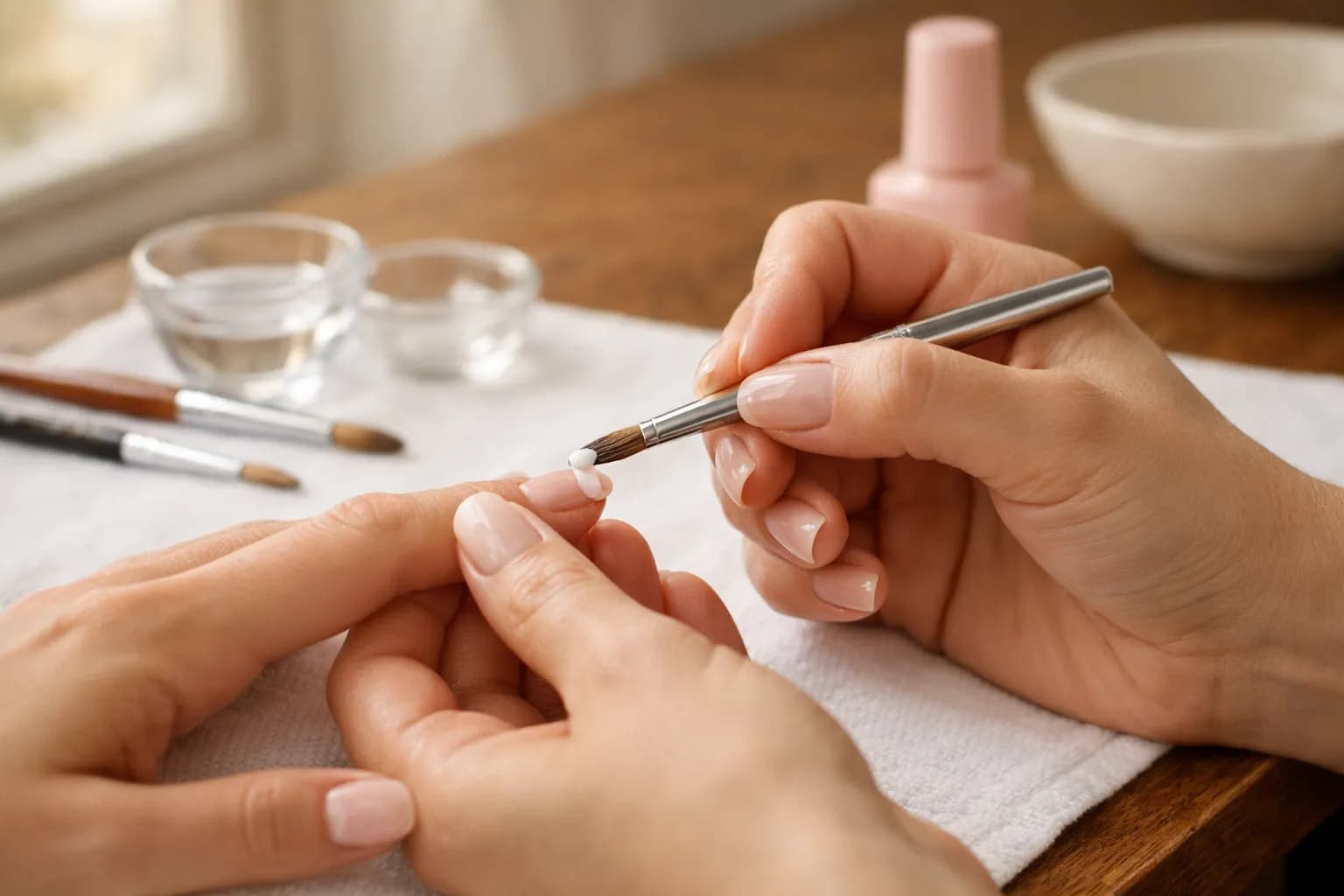
Acrylic is a two-part system: a liquid monomer and a powder polymer that combine on the brush into a workable bead. That bead is sculpted onto the nail before it hardens through a chemical reaction called polymerization, with no lamp required. The result is rigid, which makes it excellent for length and structure. The rigidity is also why a hard knock tends to break the enhancement cleanly rather than bend, which protects the natural nail underneath.
Gel comes in two main forms. Hard gel must be filed off and is typically used for sculpting extensions or overlays where flexibility isn't the priority. Soft gel (soak-off gel) is cured under a UV or LED lamp and can be removed with acetone, which is one reason it's the most popular system in the market right now. Soft gel is slightly flexible once cured, which many clients describe as feeling closer to a natural nail. It doesn't tolerate much length without reinforcement, but as an overlay or short extension it's forgiving and comfortable.
Dip powder (also called SNS or polymer powder) skips the brush-and-bead technique. The nail is coated with an adhesive resin, dipped into a finely milled colored powder, and sealed. No lamp, no monomer. It cures at room temperature. Dip is often marketed as "healthier" than acrylics, though that claim is more about marketing than chemistry. The bigger practical difference is that improperly maintained communal dip jars are a sanitation concern, which is something any licensed tech should know how to address.
Wear, Removal, and What Clients Actually Experience
Acrylic enhancements typically last two to three weeks before a fill. They're durable enough for clients who work with their hands, and the rigid structure handles daily wear well. Removal requires soaking in acetone or filing down, and a rushed removal is one of the most common causes of natural nail damage across all three systems.
Soft gel wears similarly in terms of time between appointments, but the removal process is gentler when done correctly: soak, wrap, wait, slide. Clients who have had bad experiences with acrylics often migrate to soft gel overlays because the removal feels less aggressive. Hard gel removal is more involved and requires filing, similar to acrylic.
Dip powder is frequently cited for longevity. Because there's no lamp-cure step, the finish can vary based on application technique, but a well-applied dip set can easily outlast a gel manicure on a client who's hard on their hands. The trade-off is that thickness builds up with each layer, so the look can get chunky if the tech isn't careful about thinning between coats.
For clients with thin or damaged natural nails, every enhancement system carries some risk if applied or removed improperly. That's not a reason to avoid enhancements. It's a reason to do good consultations and to teach clients how to maintain what you've applied.
Sanitation and Florida Licensing
This part matters as much as technique. Florida's Division of Hotels and Restaurants inspects salons, and nail techs are responsible for knowing the sanitation rules that apply to their tools and products.
For dip powder specifically, double-dipping (putting a client's nail back into the jar after contact) is a contamination risk. Professional techs either pour powder onto a separate surface or use a brush-on application method. Some salons have clients purchase their own personal powder jars. Whatever the system, the standard is that no product that touches a client returns to a shared container.
For all three systems, metal implements must be cleaned, then disinfected in an EPA-registered disinfectant. Single-use items (files, buffers, toe separators) should be discarded after each client or given to the client to take home. Knowing this before you're behind the table is part of what the Florida Nail Specialist license program covers during training hours.
If you want a broader look at how Florida structures nail licensing requirements, the post on what it takes to get a Florida Nail Specialist license covers the DBPR application process from start to finish.
Choosing the Right System for Each Client
A good consultation asks two things before anything else: what does this client's natural nail look like right now, and what does their lifestyle actually involve?
Clients who swim daily or work in water tend to see lifting faster with gel overlays than with acrylics. This is especially true for those who constantly wash their hands, since the slightly more porous nature of some gel formulas can let moisture work its way under the product over time. Acrylics or hard gel may serve them better.
Clients who want a thinner, more natural feel and who keep their nails shorter are usually happiest with soft gel. It cures quickly and photographs beautifully, and the removal process is straightforward enough that clients aren't dreading their next appointment.
Clients who want color variety and low maintenance between visits sometimes gravitate toward dip because the color options are broad and the wear time is reliable. As a tech, the conversation around dip is also a good opening to set expectations about nail prep, because lifting almost always starts at the cuticle area when prep is rushed.
None of these systems is automatically better. Each one has a client it fits. Your job is to match the system to the person sitting across from you, not to default to whatever you're fastest at.
What This Means If You're Still in Training
Nail programs cover all three of these systems because Florida's licensing exam expects you to understand both application and removal, as well as the chemistry behind them. If you're still deciding on a program, why nail techs are in demand in Central Florida right now gives context on where the market is heading.
If you're already licensed and working out your service menu, offering all three systems makes you a more flexible tech. Clients who want gel one visit might want acrylics for a vacation set the next. Techs who can do both don't lose that booking to someone else.
Pristine Beauty Academy's Nail Technician program includes all required testing at the academy itself, so graduates leave ready to apply directly to the Florida DBPR (Department of Business and Professional Regulation) for their license without an additional external exam step.
Frequently Asked Questions
Is dip powder safer for natural nails than acrylic? Not inherently. Both systems can cause nail damage if applied over a compromised nail plate or removed too aggressively. The health of the natural nail after an enhancement depends far more on application and removal technique than on which product was used.
Do I need a different Florida license to offer all three systems? No. Acrylics and gel are both covered under the Florida Nail Specialist license, and so is dip powder. You don't need a separate credential to offer any combination of them.
What's the main reason enhancements lift prematurely? Nail prep is the most common culprit. Oil or moisture left on the nail plate will prevent a clean bond, and any remaining cuticle tissue causes the same problem. Proper dehydration and priming before any system goes on is the step that makes the biggest difference in wear time.
Can a nail tech legally work with all three systems in a Florida salon? Yes, as long as they hold a valid Florida Nail Specialist license and the salon or suite is licensed by the state. The license covers the full range of nail enhancement services without restriction by product type.