Next to The Florida Mall in Orlando
407-747-3124
Classic vs Volume Lash Extensions What Changes the Result
2026-09-22
TL;DR: Classic lash extensions place one extension on one natural lash. Volume lash extensions fan multiple ultra-fine extensions onto one natural lash to build density and texture. The difference in outcome comes down to isolation, adhesive control, fan construction, and how well the tech reads the client's natural lash health before picking up a single extension.
Clients walk in knowing what they want to look like. They've saved photos, scrolled reference accounts, maybe described it to three different people already. What they rarely know is why two sets of extensions can look completely different even when the client asked for the same thing both times.
The answer lives in the technique, not the marketing. Understanding what separates classic from volume work, and what within each method actually controls the final result, is foundational knowledge for anyone considering a lash career in Florida.
What Classic Lashes Actually Involve
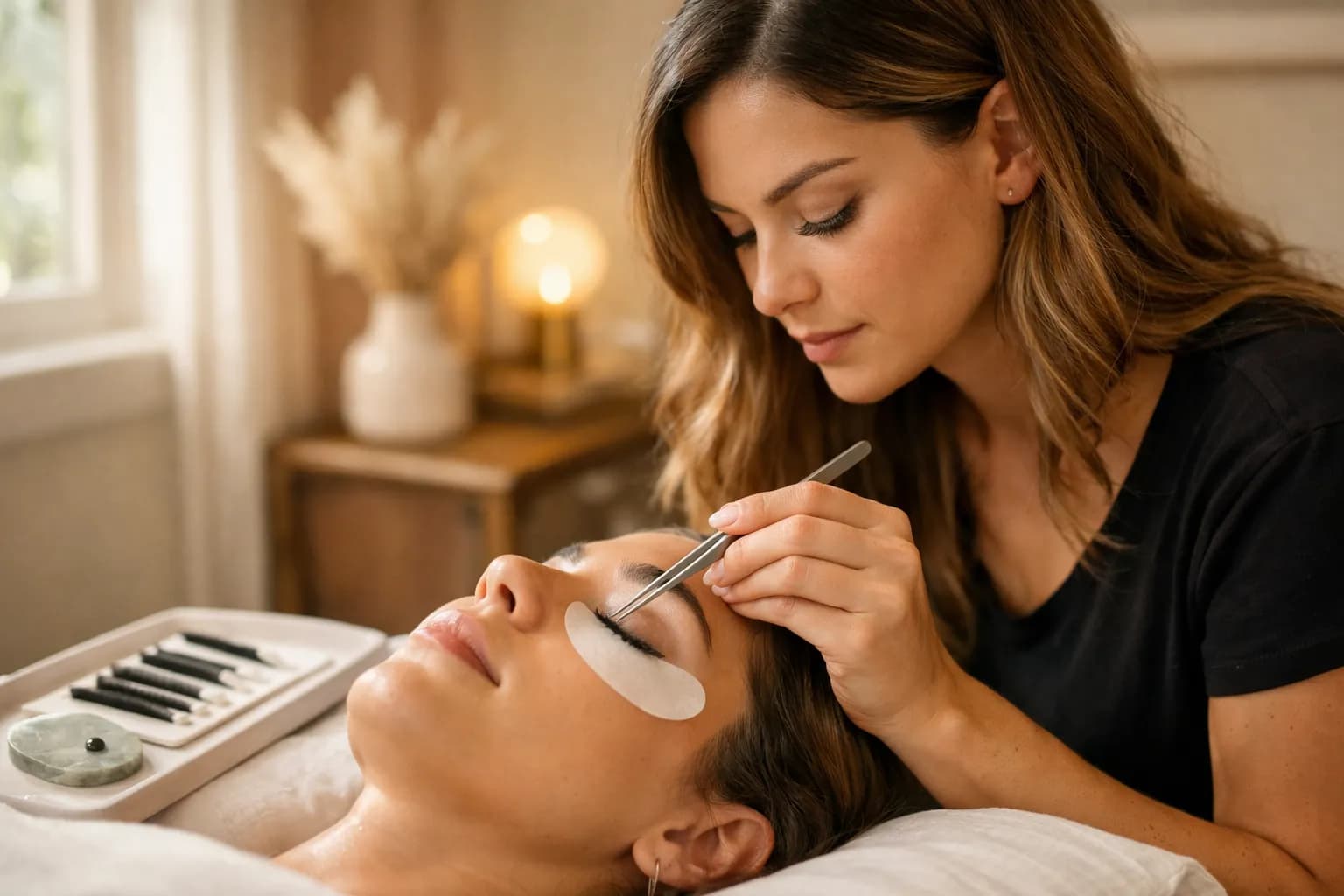
Classic application is a one-to-one ratio: one extension bonded to one isolated natural lash. The technique sounds simple, and in some ways it is. But simple doesn't mean easy.
Every natural lash must be isolated before the extension is applied. That means separating it completely from its neighbors so the adhesive never touches an adjacent lash. A missed isolation causes two natural lashes to bond together, which creates tension as they grow at different rates and can pull both out prematurely. It's one of the most common client complaints, and it's almost always a technique issue.
Beyond isolation, classic work requires reading the natural lash to choose the right extension length, curl, and diameter. A lash that is too heavy for the natural lash underneath will cause premature shedding. A curl that is too dramatic for the client's lid shape won't sit correctly. The look the client brings in as a reference and the set you can safely build for her aren't always the same thing, and explaining that clearly is part of the service.
Classic lashes tend to produce a clean, defined, mascara-like look. They work beautifully on clients with a moderate number of healthy natural lashes and suit people who want something polished without a lot of drama.
What Volume Lashes Actually Involve
Volume lash extensions use fans made from multiple ultra-fine extensions applied to one natural lash. A 2D fan has two extensions; a 5D fan has five. The extensions used are significantly thinner than classic extensions so the total weight on each natural lash stays within a safe range.
Building the fan is the skill. A tech can use pre-made fans, which are manufactured with extensions already spread and ready to pick up. Or she can build fans by hand in the moment, called Russian volume or handmade fans. Hand-building gives more control over the spread, symmetry, and base width of the fan, which directly affects how the set retains and how natural it looks at the base.
The fan has to stay open during pickup and placement. If it closes before the adhesive sets, you get a stacked look at the base with no spread, which creates uneven density and poor retention. The speed and consistency required to build and place fans correctly takes real practice to develop.
For clients with fewer natural lashes, fine lashes, or gaps in their lash line, volume fills in the texture that classic can't create. A client with sparse natural lashes applying classic extensions will still have a sparse result, because classic only works with what's there. Volume can give her a full, lush set by multiplying the coverage on each lash she does have.
What Actually Changes the Final Result
The technique category (classic or volume) sets the general direction. Four other factors shape the specific outcome.
Curl selection. Lash extensions come in multiple curl types, typically labeled B, C, D, L, and others. A C curl gives a natural open-eye effect. A D curl is more lifted and dramatic. The same client with the same fan placement will look completely different depending on which curl sits on her lash line, and a good tech factors in the client's eye shape before choosing.
Length mapping. Applying the longest extensions only at the outer corners creates a cat-eye effect. Distributing longer lengths across the center of the eye opens and rounds it. Most clients don't specify this, which means the tech's mapping decision becomes the defining visual choice of the entire set.
Lash health and growth cycle. Natural lashes shed on a roughly six-to-eight-week cycle, and not all lashes are in the same phase at once. A client who comes in for a fill every three weeks retains better than one who waits six. Extensions placed on very new baby lashes won't last as long because those lashes are near the beginning of their cycle. A tech who explains this builds trust and sets accurate expectations.
Adhesive control. Volume work in particular requires fast, controlled adhesive use. Too much adhesive makes fans clump. Too little and the extension doesn't bond properly. The adhesive has to hit the base of the fan, not the spread, so the lashes stay separated. Getting this consistently right across a full set is what separates a smooth, feathery volume result from a heavy or stiff one.
The Florida License Behind the Work
In Florida, applying lash extensions requires a Facial/Skincare Specialist license or a full cosmetology license. The Facial/Skincare Specialist path is the direct route for someone who wants to specialize in skin and lash services without the broader cosmetology curriculum.
The Certified Eyelash Extension program at Pristine Beauty Academy is structured as an add-on specialty for licensed estheticians or cosmetologists, not a standalone starting point. That order matters for anyone planning their training path.
If you're building a career focused on lashes, it's worth understanding how lash aesthetics have shifted. Posts like statement lashes are back and manga lashes and why beauty professionals need to master it now walk through what clients are currently requesting and why technical range across classic and volume gives you more ways to say yes.
Reading a Client Before You Pick Up a Lash
One thing that separates an experienced lash tech from a new one is the consultation. Before choosing classic or volume, a skilled tech assesses:
- Natural lash count and density across the lid
- Individual lash length and thickness
- Any sensitivity history or previous reactions to lash adhesive
- The client's lifestyle (how often she wets her face, whether she sleeps face-down, how she removes eye makeup)
A client who says she wants a full glam set but has very fine, sparse natural lashes is better served by a lightweight volume set than by stacking heavier classic extensions she can't support. A client who wants natural but has thick, abundant lashes might actually look more natural in a light classic set than in volume, because her lashes already have density.
The consultation isn't a formality. It's how you avoid a client coming back unhappy two weeks later.
FAQ
Q: Can you mix classic and volume in one set? A: Yes. Hybrid sets combine classic extensions on some lashes with volume fans on others to create texture and dimension. A tech might use classic extensions on longer lashes toward the center and volume fans to fill in sparse areas at the inner and outer corners.
Q: Do volume lashes damage natural lashes more than classic? A: Not when done correctly. The extensions used in volume work are thinner than classic extensions, so the total weight on each natural lash is kept comparable. The risk comes from oversized fans or excessive extensions on a single lash, which is a technique error rather than an inherent risk of the volume method.
Q: How long does a classic set take compared to volume? A: Classic full sets typically run 90 minutes to two hours. Volume sets often take two to three hours for a full application because fan construction adds time. Experienced techs work faster, but rushing adhesive or fan placement to shorten the appointment creates retention problems.
Q: Does Florida require a separate license for lash extensions? A: Florida does not issue a standalone lash license. You must hold a Facial/Skincare Specialist license or cosmetology license to apply lash extensions legally. The eyelash extension certification adds the specialized technique training on top of that existing license.