Next to The Florida Mall in Orlando
407-747-3124
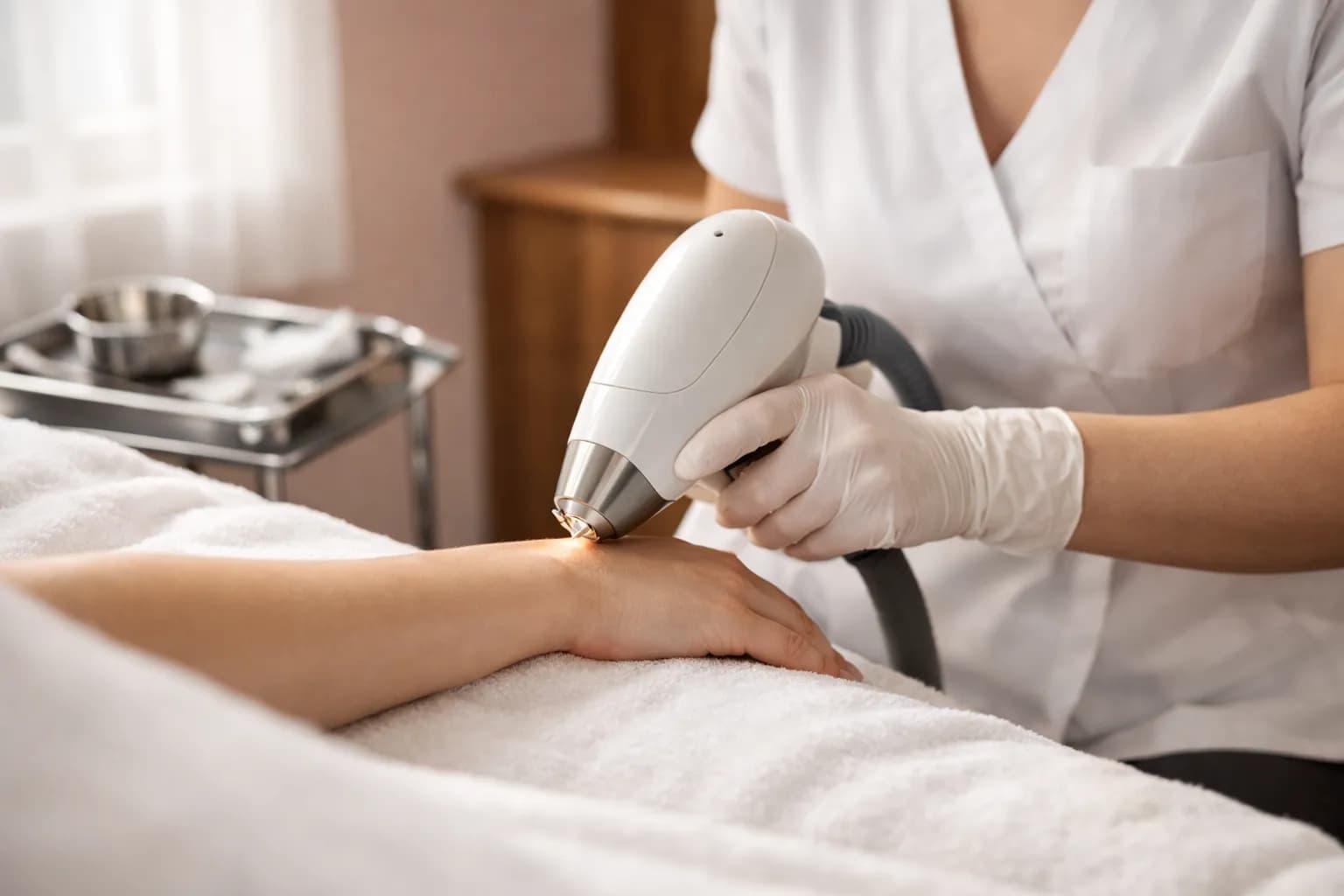
Electrolysis vs Laser Hair Removal Who Each Suits
TL;DR: Electrolysis destroys each hair follicle one at a time using an electrical current, and it is the only method the FDA considers permanently effective for all skin tones and hair colors. Laser targets a group of follicles at once using light energy absorbed by pigment, which makes it faster for larger areas but less effective on light or gray hair. In Florida, both services require a specific license — and they are not the same license.
If you have ever tried to compare these two services for a client, or tried to figure out which one to train for, you have probably noticed that most explanations skip the important part: why the differences in how they work translate directly into differences in who gets results. This post covers the technique and client fit for each, and then closes with the Florida licensing picture.
These are two genuinely different services. A client with coarse dark hair on a small area might be a candidate for either. A client with red hair or light blonde peach fuzz is not a laser candidate at all. Understanding that distinction is what separates a technician who can consult well from one who just books whoever walks in.
How Electrolysis Works
Electrolysis inserts a very fine probe alongside each individual hair shaft, into the follicle. An electrical current is then delivered to the base of the follicle to destroy the cells responsible for hair growth. The treatment is methodical — follicle by follicle — which is why it takes multiple sessions but delivers a permanent result.
There are three modalities used in professional electrolysis:
- Galvanic uses direct current to cause a chemical reaction in the follicle.
- Thermolysis uses high-frequency alternating current to generate heat.
- Blend combines both, which is the most common method in modern practice.
The reason electrolysis works on every skin tone and every hair color is that it does not depend on pigment at all. The probe targets the follicle's location, not its color. That matters enormously for clients with gray, white, red, or fine blonde hair, people for whom laser simply cannot do the same job.
Electrolysis is slower per session than laser. A small area like the upper lip might take 15 to 30 minutes; a larger area like a full beard or chest takes considerably longer. Clients need a series of sessions spaced out over months because hair grows in cycles, and the follicle must be treated during the active growth phase to be destroyed permanently.
How Laser Hair Removal Works
Laser hair removal uses concentrated light energy that is absorbed by melanin, the pigment in the hair shaft. When the pigment absorbs the light, it converts to heat; that heat then travels down into the follicle to damage or destroy the cells that produce future growth.
The key word there is melanin. Laser needs contrast: dark pigment in the hair against lighter surrounding skin. That is why traditional laser worked best on people with dark hair and fair skin, and why early technology had real limitations for deeper skin tones. Newer wavelengths like Nd:YAG have extended the range of treatable skin tones, but the fundamental requirement for enough pigment in the hair itself does not change. Light blonde and red hair absorbs almost no light energy, and gray hair fares no better, so laser produces little result on those colors regardless of skin tone.
Laser covers more surface area per pulse than electrolysis, making it faster for large areas like legs and back, including the underarms. Results are described by the FDA as permanent hair reduction rather than permanent removal, because the degree of long-term reduction varies by individual and some regrowth is common over time.
Who Each Method Suits
The client's hair color and skin tone are the two biggest factors in determining which service makes sense. Here is how they break down:
Electrolysis is the better fit for clients who have:
- Light, gray, red, or white hair (no pigment for laser to target)
- Previously had laser treatments and have scattered regrowth that needs finishing work
- Small, specific areas where precision matters more than speed
- Any skin tone, including very deep skin tones where some laser wavelengths carry higher risk of pigmentation changes
Laser is often a better fit for clients who have:
- Dark hair with enough melanin to absorb the light energy
- Larger treatment areas where doing follicle-by-follicle work would be impractical
- Moderate to fair skin tones where contrast between hair and skin is strong
Some clients combine both. They might use laser to reduce the bulk of dark hair over a large area, then follow up with electrolysis to permanently clear the remaining stragglers. That combination approach is common in practice, so understanding both methods is genuinely useful whether you end up specializing in one or offering both.
Pain tolerance and timeline expectations matter too. Laser is often described as a rubber-band snap feeling, while electrolysis is sometimes described as a brief heat or sting at each insertion point. Neither is pain-free, and honest pre-consultation conversations about what to expect are part of good technique.
The Florida Licensing Picture
This is where a lot of confusion comes from, and it is worth being clear.
In Florida, electrolysis requires a license through one state agency, and laser hair removal requires a license through a separate agency — each with its own distinct pathway.
Electrolysis is regulated by the Florida Department of Health. To practice independently, an electrologist must pass the IBECK (International Board of Electrology Certification) state exam. Florida's approved training programs require specific hours that prepare graduates for that exam.
Laser hair removal in Florida is also regulated by the Florida Department of Health. It does not require a cosmetology or esthetics license; it requires training through a Department of Health approved program, and the supervising requirements vary depending on the clinical setting.
The Electrolysis/Laser Technician program at Pristine Beauty Academy is a Florida Department of Health approved 320-hour program (120 hours of theory, 200 hours of supervised clinical work) that prepares graduates to sit for the IBECK state exam and to perform laser services within Florida's regulatory requirements.
If you are considering either career path, the licensing route matters as much as the technique itself. A graduate who can perform both services has a broader range of clients and practice settings available to them.
For anyone thinking about what that looks like on the business side, the science-driven beauty and skin longevity post covers how client demand for results-oriented services is shaping the industry right now. And if you are already thinking ahead to what running your own laser practice looks like, the laser hair removal business in Florida post touches on the technology piece of that conversation.
FAQ
Q: Is electrolysis or laser hair removal more effective? A: They are effective in different ways for different clients. Electrolysis is the only method classified by the FDA as permanently removing hair; it also works on all hair colors and skin tones. Laser is faster for large areas and produces strong permanent reduction for clients with dark hair, but it does not work well on light or gray hair, and red hair poses similar challenges. The better question is which method suits a specific client's skin tone and hair color given their treatment goals.
Q: Can one Florida license cover both electrolysis and laser hair removal? A: Florida regulates both under the Department of Health, but the pathway is through a Department of Health approved training program—not through a DBPR esthetics or nail license. The IBECK exam applies specifically to electrolysis practice. Laser hair removal has its own training and supervision requirements. A program that covers both, like the 320-hour Electrolysis/Laser Technician program, prepares graduates for both service types under Florida law.
Q: Why does laser not work on gray or red hair? A: Laser targets melanin, the pigment in the hair shaft. Gray hair has lost most of its melanin, and red hair contains a different type of melanin (pheomelanin) that absorbs laser wavelengths poorly. Without enough of the right pigment, the light energy has nothing to absorb and cannot generate the heat needed to damage the follicle. Electrolysis, which uses electrical current rather than light, is not affected by hair color at all.
Q: How many sessions does each method require? A: Both require multiple sessions because hair grows in cycles, and follicles can only be treated during the active growth phase. Laser typically involves six to eight sessions spaced four to six weeks apart for most body areas. Electrolysis sessions vary widely depending on the area being treated and the density of hair, but a full clearance plan usually spans several months to over a year of regular appointments.