Next to The Florida Mall in Orlando
407-747-3124
What Is Driving Demand for Microblading and Powder Brows
TL;DR: Powder brows are outpacing microblading in client demand right now, largely because they heal more predictably across a wider range of skin types. Microblading still has a loyal following, but the reasons clients choose one over the other have gotten more specific. If permanent makeup is on your career radar, understanding both services puts you ahead.
A few years ago, "microblading" was the word every brow client said when they walked through the door. It was the shorthand for all semi-permanent brow work, even when what the client actually wanted looked nothing like hair strokes. That's shifting. Clients in 2026 are coming in more informed, arriving with saved photos and skin-type concerns and ready to ask pointed questions about healing. The conversation at the consultation table has changed, and so has what artists are booking.
This post breaks down what's actually driving that shift and why certain skin types and lifestyle factors are pushing people toward powder brows. It also covers what any of this means if you're considering a career in permanent makeup.
Why Clients Started Asking Harder Questions
Social media did a lot of the education here, for better and for worse. Clients saw healed results on people with oilier skin and watched hair strokes blur over time. They also noticed that some brows photographed beautifully at day five but looked very different at month six. That kind of transparency, even when it came from everyday people posting their own healing journeys rather than artists, pushed prospective clients to show up to consultations with real questions and specific concerns rather than a vague vibe.
The questions artists are fielding now tend to sound like this:
- "My skin is pretty oily. Will the strokes stay crisp?"
- "I don't want anything that looks too drawn on, but I also don't want the strokes to spread."
- "How long does powder actually last compared to microblading?"
- "Is one of them better if I'm going to be in the sun a lot?"
Those are good questions. They're also the questions that separate artists who can hold a consultation from artists who can only hold a tool.
What's Actually Pulling Clients Toward Powder Brows
The demand shift toward powder brows isn't a style trend so much as a practicality trend. A few factors are driving it.
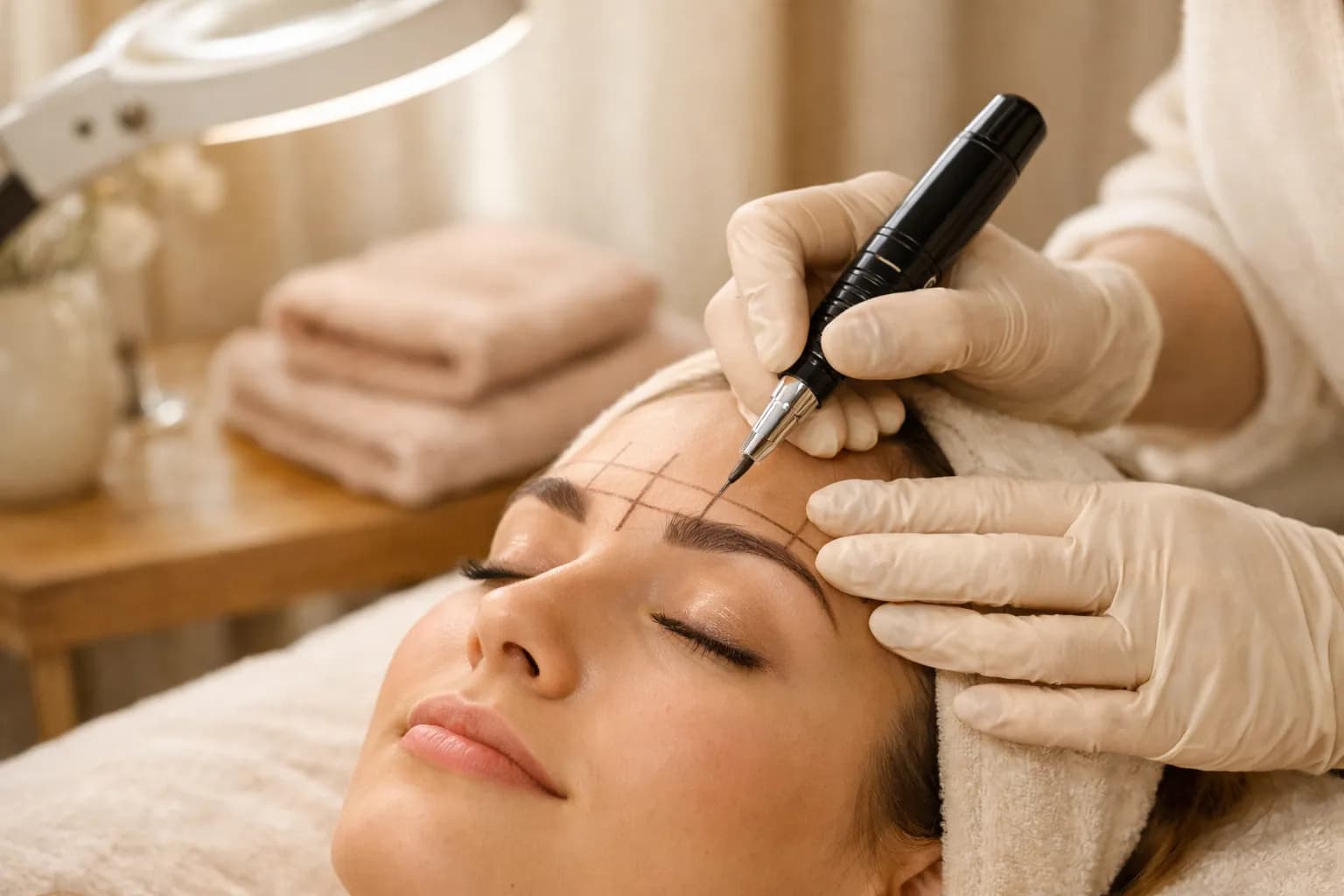
Skin type range. Microblading works best on dry to normal skin. The blade creates small cuts in the dermis and deposits pigment into those incisions. On oilier skin those fine strokes tend to blur as they heal because the sebaceous glands push the pigment. The same blurring happens on skin that's more mature and textured. Powder brows use a digital machine with a needle that implants tiny dots of pigment in a stippling pattern. That technique distributes pigment more evenly and holds better across oilier or thicker skin. More clients now know this, which means more of them are self-sorting toward powder before they even call.
Longevity expectations. Powder brows generally last longer before a touch-up is needed, often somewhere in the range of two to three years depending on skin and lifestyle. Microblading touches up tend to run on a shorter cycle. Clients who've had one service done are making more deliberate choices the second time around.
The softness factor. There's a client demographic that specifically wants the look of powder brows: a soft, diffused, filled-in brow that mimics the effect of brow powder or tinted brow gel. It's wearable for people who don't want the natural hair-stroke look but also don't want a harsh line. That aesthetic has held up well even as beauty trends have moved around it.
Healing predictability. This is probably the biggest one. Artists and clients both have more visibility now into what healing looks like across different skin types, and powder brows have a reputation for healing more consistently. Microblading results can vary a lot depending on skin type and artist technique, and even careful aftercare can't always close the gap. That variability has made some clients cautious.
Where Microblading Still Holds Its Ground
Microblading isn't going anywhere. There's a specific client profile it serves very well, and those clients aren't switching.
The ideal microblading candidate tends to have dry to normal skin, isn't on blood thinners, and wants a result that mimics the look of individual brow hairs rather than a filled shape. People who have naturally full brows but sparse patches, or who want something that looks as natural as possible close up, often land on microblading because the hair-stroke technique, done well, genuinely reads as real hair.
There's also a segment of clients who had microblading years ago and return specifically to maintain that look. Retention through repeat touch-ups is a real part of a permanent makeup artist's business, and those clients aren't converting to powder.
Combination brows, where an artist uses both hair strokes and shading, are also growing in popularity as a middle-ground option. That technique requires competency in both approaches, which is a point worth noting for anyone training now.
The License Question Florida Artists Ask First
Both microblading and powder brows fall under the same Florida licensure umbrella. In Florida, performing either service requires a Tattoo Artist License through the Florida Department of Health. That applies regardless of whether you use a blade or a machine. Esthetics training helps with skin knowledge and client consultation, but it doesn't authorize you to do either of these services on its own.
This is a point that trips up a lot of people who assume that because brows are a "face" service, it falls under esthetics. It doesn't. The pigment goes into the skin, and that's what triggers the tattooing statute.
If you've read our post on why permanent makeup is booming, the licensing piece is covered there too. The short version: the Florida Department of Health licenses the artist, not the service category.
What This Means If You're Training Now
If permanent makeup is on your list, the demand picture right now is genuinely encouraging. Powder brows in particular are drawing clients who want something low-maintenance, durable, and wearable across a range of aesthetics. Combination brows are a differentiator for artists who can do both. And the consultation skills required to assess skin type, explain healing, and set realistic expectations are exactly the skills that separate booked artists from ones who struggle to retain clients.
Training matters here in a specific way. Technique errors in permanent makeup are not correctable the same day. Pigment choice, needle depth, skin stretch, and aftercare guidance all affect what a client sees six weeks later. The learning curve is real, which is why supervised clinical hours, not just theory, are the foundation of any credible program.
If you're exploring what programs are available in Central Florida, the Pristine Beauty Academy programs page has details on what each one covers, including permanent makeup.
It's also worth knowing that the demand conversation doesn't happen in isolation from trends. We looked at why skin health is the new status symbol in 2026 in an earlier post, and the same client mindset showing up in skincare is showing up in brow consultations: people want results that look considered, not conspicuous. Powder brows fit that energy. So does well-executed microblading.
The artists doing well in this space right now aren't married to one technique. They can assess a client's skin and explain the tradeoffs honestly, then execute whichever service fits. That's the competency worth building.
FAQ
What is driving demand for powder brows over microblading right now? Powder brows are growing in demand mainly because they heal more consistently across a wider range of skin types, especially oilier and more mature skin, where microblading strokes tend to blur over time. Longer-lasting results and a soft, wearable aesthetic are also factors.
Does microblading or powder brows last longer? Powder brows generally hold up longer before a touch-up is needed, often two to three years, compared to microblading, which typically needs a refresh sooner. Individual results vary based on skin type and sun exposure, and how well you follow aftercare guidance also plays a role.
What Florida license do you need to do microblading or powder brows? Both services require a Tattoo Artist License from the Florida Department of Health. Because pigment is implanted into the skin, both fall under Florida's tattooing statutes regardless of the tool used.
Are combination brows a growing service category? Yes. Combination brows, which blend hair-stroke microblading with powder shading, are becoming more popular as a middle-ground option for clients who want both definition and soft fill. Artists who can execute both techniques have more flexibility in what they can offer.