Next to The Florida Mall in Orlando
407-747-3124
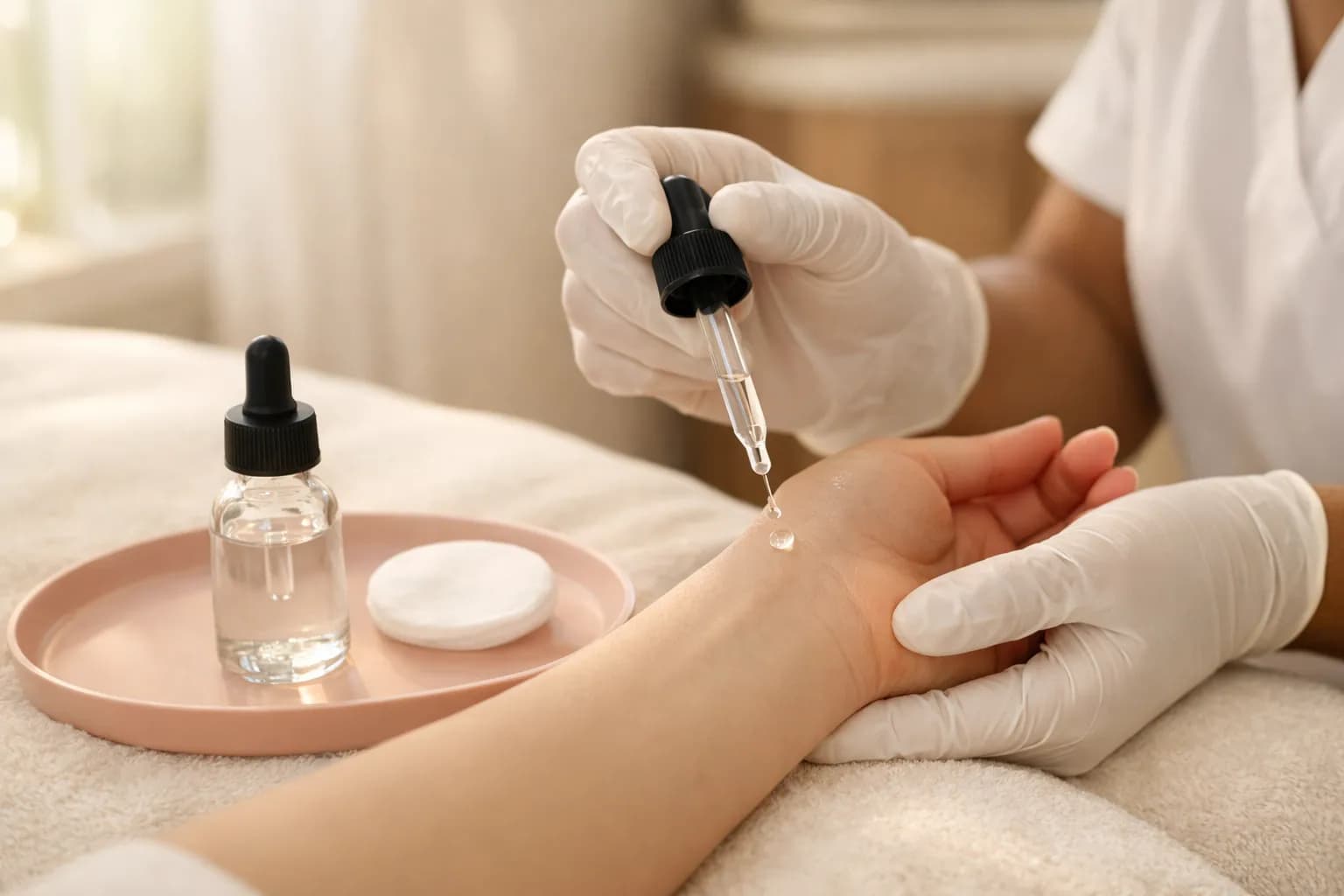
Why You Should Never Skip a Patch Test Before Facials
TL;DR: A patch test is a small amount of product applied to a low-risk spot on the skin at least 24 hours ahead, ideally 48 hours before a full service, to check for an allergic or sensitivity reaction. Skipping it puts your client at risk and puts your license on the line. Every service in the facial and lash programs involves products that require pre-testing, and the same applies to electrolysis and permanent makeup.
Some of the most uncomfortable conversations a licensed beauty pro ever has happen after a reaction, not before. A client calls with swollen eyes and burning skin, and they want answers. What almost always comes out next is this: the patch test got skipped because there wasn't enough time, the client said they'd never had a reaction before, or nobody brought it up at all.
That's a hard lesson to carry. The good news is that it's entirely avoidable.
Patch testing is one of those steps that feels procedural until you actually understand what it's protecting against. Once you do, skipping it stops feeling like an option.
What a Patch Test Is Actually Doing
A patch test is not a formality. It's a controlled exposure. You're applying a small amount of the product or adhesive you plan to use, at a location that won't cause serious harm if there's a response, and then watching what happens over 24 to 48 hours before you do anything else.
The skin's immune system can recognize certain ingredients as threats even on first contact. More often, sensitization builds over repeated exposures, which is why a client can use a product for months with no issue and then react suddenly. That history of "never had a problem before" is not a pass. It's actually worth flagging, because cumulative sensitization is real.
What you're watching for during the patch test window:
- Redness that appears within minutes and doesn't fade
- Raised or itchy skin, including hives, at the test site
- Warmth and swelling, or any sensation the client describes as burning
- Delayed reaction that shows up closer to the 48-hour mark, which can indicate a true allergic response rather than just irritation
Irritation and allergy are different physiologically, but both tell you something important: this product on this person is a no. You adjust before the full service, not after.
Which Services Require It and Why
Patch testing applies across more services than most people realize coming into training. Here's where it matters most in the programs Florida beauty schools teach.
Lash extensions. Cyanoacrylate adhesives, the family most lash glues belong to, are among the more common sensitizers in the beauty industry. A client who has worn extensions before can still develop a reaction, and the eye area has very little tolerance for swelling. Test the adhesive on the inner arm or behind the ear, never near the eye. If there's any response, you do not proceed. Full stop.
Facials and chemical exfoliation. AHAs and BHAs have the potential to cause a strong reaction on compromised or sensitized skin. Enzymes and retinoids carry the same risk. The Facial Specialist program covers skin analysis precisely because knowing the skin in front of you determines which products belong on it. A patch test before using any active ingredient is part of that analysis, not separate from it.
Permanent makeup. Pigments contain iron oxides and other colorants that can trigger immune responses. Because permanent makeup goes into the skin, the stakes are higher than with topical products, and the window for course-correcting is much smaller. Test the pigment on a less visible area and document the response before any full procedure.
Electrolysis and laser hair removal. While the modality here is energy rather than topical product, numbing agents (when used), cooling gels, and post-treatment serums all deserve a patch check. Laser and electrolysis also require a test spot on the actual treatment area to assess the skin's response to the energy level before treating a large surface.
How to Run a Patch Test That's Actually Useful
A patch test done carelessly gives you almost no information. Here's what makes it reliable.
- Use the exact product you will use in the service. Not a substitute, not a similar formula from the same brand. The actual product.
- Apply a coin-sized amount to a low-sensitivity site. The inner wrist, the inner elbow, or behind the ear are the standard choices depending on the service.
- Leave it uncovered and undisturbed for 24 hours minimum, 48 hours for adhesives and pigments.
- Give the client clear, written instructions: don't wash the area, don't apply anything else to the spot, and contact you if anything changes before they come back.
- Document it. Write down the product name and lot number, the date applied, the site, and what you observed at follow-up. This record protects your client and protects you.
The documentation piece is where a lot of new professionals get loose, and it matters more than it seems. If a reaction surfaces days later and someone asks what you used, you want a record, not a memory.
What to Say to a Client Who Wants to Skip It
This is where the real skill is. Clients are busy. They booked an appointment and they showed up. They don't want to hear that they need to come back in two days before anything happens.
You don't have to be apologetic about it. You can be direct and warm at the same time.
Something like: "Before we use any new adhesive or active product on your skin, I do a quick patch test first, just to make sure your skin doesn't have a strong response. It takes about two minutes now, and then you come back in 48 hours for the full service. I'd rather catch anything now than have you dealing with a reaction after the fact."
Most clients respect that. The ones who push back tend to drop the resistance once they understand what you're actually protecting them from. And the ones who don't? That's information too. A client who won't let you practice proper safety protocols is a client relationship worth thinking carefully about.
Patch testing also factors into how you handle clients who come to you with skin that's already sensitized, which is increasingly common as at-home skincare routines get more aggressive. Over-exfoliated, barrier-compromised skin reacts faster and harder to almost everything. A patch test on a client like this is not just a formality. It is the only way you know where the line is.
For newer lash professionals, it's also worth reading through what goes into the service from an application standpoint, because the adhesive question doesn't live in isolation. Understanding the full picture of lash technique helps you see why adhesive selection, retention, and patch testing are all connected decisions.
The License Side of This
Florida doesn't issue a specific patch-test mandate as a standalone rule, but the broader obligation is clear. Licensed professionals are expected to practice within the scope of their training and to avoid causing harm. A preventable allergic reaction caused by skipping a known safety step is exactly the kind of thing that generates a DBPR complaint. It could quite possibly trigger a lawsuit on top of it.
Beyond the regulatory angle, your reputation in a market like Orlando is built appointment by appointment. One bad outcome travels faster than ten good reviews. Patch testing is one of the cheapest forms of professional insurance you have.
If you're still in school, get comfortable running patch tests on every practical client, even when it feels slow and overly cautious. The habit you build in training is the one you'll carry into every room you work in for the rest of your career.
Frequently Asked Questions
Can a client sign a waiver instead of doing a patch test? No waiver removes your professional obligation to practice safe technique. A signed form documents informed consent, but it does not eliminate your duty of care or protect you from a licensing complaint. Do the patch test.
How long does a patch test take? The application itself takes two to five minutes. The observation window is 24 to 48 hours, depending on the service and product. Lash adhesives and permanent makeup pigments should sit for the full 48 hours before you proceed.
What if a client has sensitive skin but has never reacted to a product before? A history of no reactions is useful information, but it's not a substitute for testing. Sensitization can develop over time, and barrier-compromised skin in particular can respond differently to the same product under different conditions. Test regardless.
Do you need to patch test for every appointment, or just the first one? At minimum, test at the first appointment. Also retest any time you introduce a new product, and treat a switch in adhesive brand or formula as its own separate test. If a client has had a reaction in the past, test at every visit. If months have passed between appointments, retesting is good practice because the skin changes.