Next to The Florida Mall in Orlando
407-747-3124
Why Licensed Beauty Pros Are Adding a Specialty Now
TL;DR: Licensed Florida beauty pros are increasingly adding lash extension and permanent makeup certifications onto their existing credentials, and the state has separate licensing rules for each. Knowing exactly which license covers which service keeps you legal and opens up real income options without starting over from scratch.
Something has been shifting quietly across Orlando salons and suites over the past couple of years. Estheticians who already hold a Florida facial specialist license are coming back to school. Nail techs with a full book are carving out time to train on something new. The question everyone keeps asking is the same: what can I legally add to my menu without getting a whole new license?
The answer is not one-size-fits-all in Florida, and the confusion around it is real. Which services fall under your existing license? Which ones require a completely separate credential? And when a trend is pulling clients in one direction, how do you position yourself to meet them there?
This post breaks all of that down, service by service.
The Trend Driving the Shift
Clients in 2026 want more from a single provider. The preference for consolidating beauty appointments under one trusted professional is showing up everywhere, from suite rental communities to social media booking habits. A client who trusts you for facials is already primed to book lashes with you. A client who loves her nails done by you is asking about her brows.
That trust factor is significant. It takes time to build, and once it exists, clients do not want to hand it to someone else for a different service. Licensed pros who can offer two or three complementary services under one roof keep more of that client relationship, and more of the revenue that comes with it.
At the same time, beauty professionals are thinking longer about career sustainability. A single-service book is fragile. Slow season hits harder and trend cycles affect demand. A slow month in one service can sink your numbers if that is all you offer. Stacking a specialty that complements your core work is one of the most practical ways to stabilize that.
What Florida Actually Requires, Service by Service
This is where most of the confusion lives, so let's be specific.
Lash extensions in Florida fall under the facial specialist license issued by the Florida DBPR (Department of Business and Professional Regulation). If you are already a licensed facial specialist, lash extension work is within your scope. What you need is proper training and a certificate to demonstrate competency. You do not need to sit for a separate state exam or apply for a new license category.
If you are a licensed nail tech and not a licensed esthetician, lash extensions are outside your current scope. You would need to hold a facial specialist license before offering them legally.
Permanent makeup in Florida works differently, and this is the piece that surprises most people. Permanent makeup is applied via a tattooing process, which means it is regulated by the Florida Department of Health, not the DBPR. Graduates who complete a permanent makeup program apply for a Tattoo Artist License. That license is its own standalone credential. It does not require you to hold an esthetics or facial specialist license first. An esthetician can add it. A nail tech can add it. Someone with no prior beauty license can pursue it as their first credential.
That structural difference matters when you are planning your next move. You are not extending your existing license when you add permanent makeup. You are acquiring a second, separate one.
Why Lashes and PMU Make Sense as Add-Ons
Both services have a few things in common that make them practical specialty choices for working pros.
First, they are appointment-based at a higher price point than many maintenance services. A full set of lash extensions or a permanent makeup session represents a meaningful booking, and refills and touch-ups create reliable recurring revenue on top of that.
Second, the training paths are focused. You are not committing to a year-long program. You are adding a concentrated block of specialized hours onto a foundation you already have. For someone who has already built a client base and cannot step away from their business for months, that matters.
Third, the demand is documented. The permanent makeup boom that started in 2025 has not cooled. Clients who discovered the convenience of waking up with their brows done are not going back. Lashes have followed a similar pattern, with styles shifting toward more wearable, everyday looks that keep clients on a regular refill schedule.
What the Training Path Looks Like
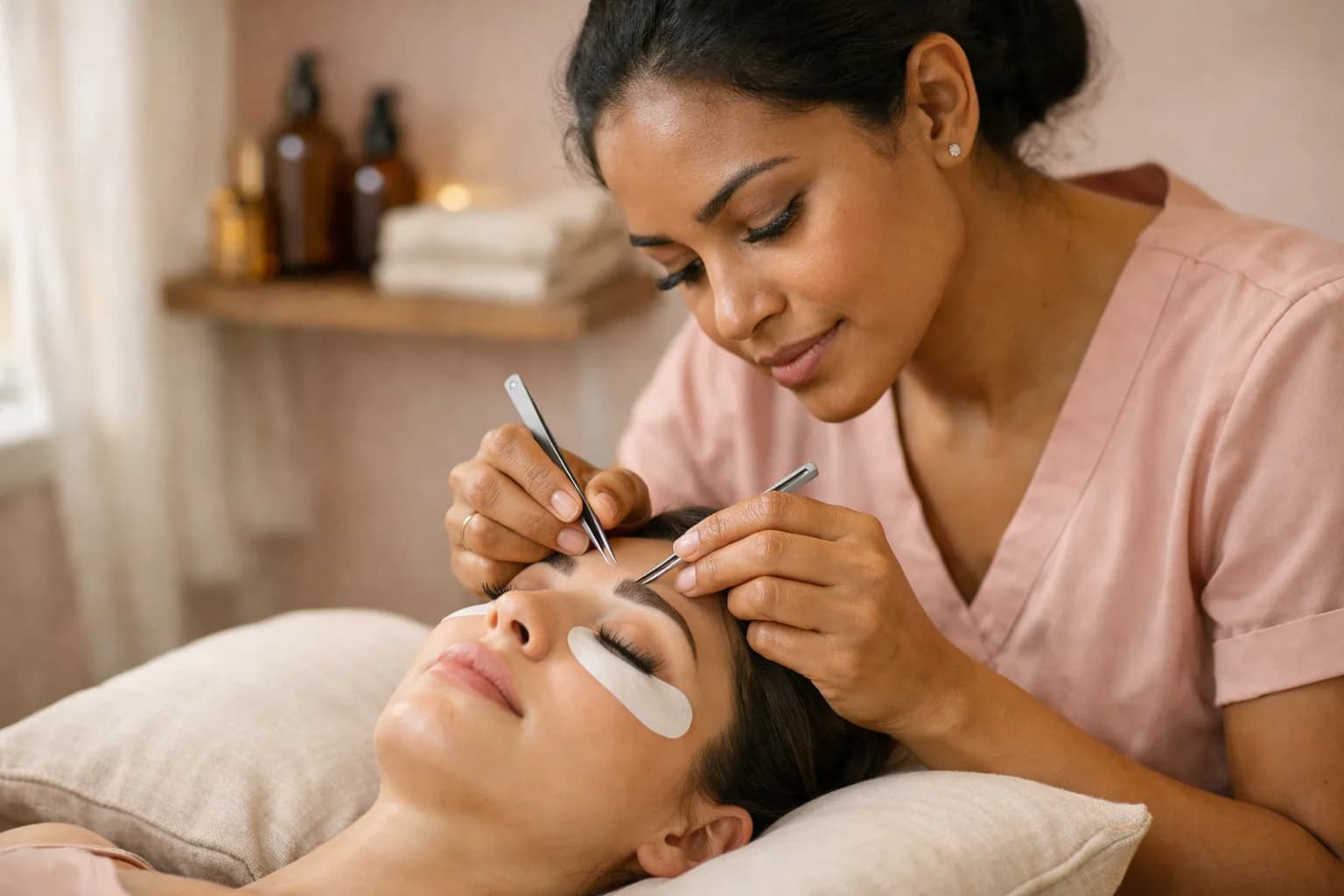
For lash extensions, a Certified Eyelash Extension add-on pairs naturally with a facial specialist license. The training focuses on isolation technique, adhesive chemistry, mapping for eye shape, and safe removal, all areas where your existing skin knowledge gives you a head start.
For permanent makeup, the training covers color theory and skin anatomy as it relates to pigment retention, along with machine technique and the specific considerations for brows, lips, and liner work. Because it is a separate license category in Florida, you will complete the program and then apply separately to the Florida Department of Health for your Tattoo Artist License.
If you are looking at both, the sequencing matters. Most pros find it easier to add lashes first (since it builds on esthetics knowledge they already use daily) and then pursue PMU as a second phase, especially if the PMU training timeline works around their existing schedule.
Pristine Beauty Academy offers both of these as focused programs in Orlando. You can see how the certifications are structured at the add a specialty page, which outlines what each add-on covers and who it is designed for.
The Business Case for Adding a Specialty
A second service does not automatically mean a busier book right away. It means you have something new to market, which takes a little lead time. Here is how working pros have made it land:
- Build your existing clients into the new service first. They already trust you, which lowers the barrier to trying something new.
- Position the combination clearly on your booking page. Clients should be able to see at a glance that you do both, rather than stumbling on it later.
- Price the new service at market rate from the start. Underpricing to build a lash or PMU book tends to attract clients who leave when you correct your prices.
- Keep your licensing current. Lash certifications that fall under your facial specialist license renew with your license every two years by October 31, with 16 hours of approved continuing education required. Your PMU Tattoo Artist License has its own renewal requirements through the Department of Health.
For a broader look at how consumer spending habits are shaping which services clients are willing to invest in right now, the post on bold beauty and smarter spending is worth reading alongside this one.
And if you are thinking about the business structure side of running two services, whether that means booth rent, a suite, or your own studio setup, the licensing and career questions that come up are similar to what is covered in posts like the facial specialist vs nail specialist license breakdown, which walks through how Florida separates different credential types.
FAQ
Can a Florida nail tech legally offer lash extensions? Not without an additional license. Lash extensions fall under the facial specialist scope in Florida. A nail tech would need to hold a separate facial specialist license issued by the Florida DBPR before legally offering lash services.
Does a licensed esthetician need a cosmetology license to do permanent makeup in Florida? No. Permanent makeup is regulated by the Florida Department of Health under a Tattoo Artist License, not by the DBPR. You do not need any prior esthetics credential to apply for that license after completing the required training.
How often do lash extension certifications renew in Florida? Lash extensions fall under the facial specialist license, which renews every two years by October 31. Renewal requires 16 hours of approved continuing education.
Is it worth adding a specialty if my current book is already full? A full book in one service is a great problem to have, but it also means you have built client trust you can extend to a new service. Many pros find that adding a complementary specialty brings in new clients through different search terms and referrals, rather than just splitting the same hours a different way.